- Home :
- Products & Services :
- Literature :
- News :
- Partners :
- Contact
Radiology Equipment
Planning - Design - Delivery - Installation - Set Up - Training - Warranty
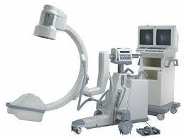
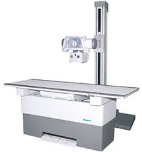
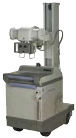
X-ray.....GE, Philips, Siemens, Meridian, Del, Bennett, Gendex, Trex, Control-X
Portable/Mobile X-ray....GE, Siemens, DynaRad, MinXray
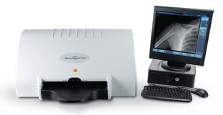
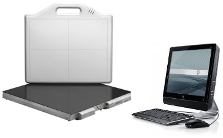
DR........LG, PZ Medical, iRay
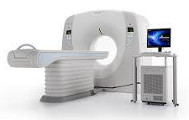
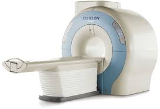




Imaging Systems, Printers, Mammography Systems, Bone
Density Systems, Imaging Tables and Medical Workstations.
Recent Postings
Nov 29, 2023
Introduction to the OEC 9900 Elite C-Arm
The OEC 9900 Elite provides mobility and maneuverability. It also offers superb image quality and high performance with its powerful generator, image processing features and simple operation. The OEC 9900 is easy to maneuver throughout your facility and you can approach the patient or imaging area from multiple angles.
Read Full ArticleNov 1, 2023
Section 179: End-of-Year Tax Deductions For X-ray Equipment Purchases
U.S. tax code Section 179 expense is a business asset that can be written off right away rather than being depreciated over time. Corporations, LLCs, Partnerships and Sole Proprietorships are eligible for deductions. Deductions on expenditures vary from year to year.
Read Full ArticleOct 20, 2023
A Must Have! - An Ironclad Medical Imaging Equipment Warranty
Regardless of where you shop for healthcare Radiology systems , it is crucial to be educated on a company's warranty. Many people make the mistake of focusing on the warranty of product they are buying.
Read Full ArticleOct 16, 2023
Refurbished C-arms Are The Best Choice For Pain Management
You know that in the financial climate of "everything costs more", you need to rely on your instincts to get the best price combined with the best value. Aim for the sweet spot, fair-market value is where you start.
Read Full ArticleOct 9, 2023
DR Flat Panel Upgrades For Portable X-rays
Digital X-ray is an affordable upgrade to your existing medical imaging equipment. Digital Radiography has many advantages over Computed Radiology (CR) systems.
Read Full ArticleAug 5, 2022
Healthcare Costs in 2022 and Beyond
Healthcare is becoming more expensive and less available. We can look at what's going on but we can't quite figure out how to solve the problem.
Read Full ArticleOct 22, 2019
Healthcare and Medicare For All
There is much talk and many proposals to replace private health insurance with Medicare for All (M4A). Although the idea of everyone having healthcare coverage without having to purchase a insurance policy sounds extremely attractive, there are several issues people should understand.
Read Full ArticleNov 14, 2018
Planning Your Imaging Project
It appears that developers of Imaging Facilities are trying to establish construction plans, imaging systems and budget pricing without understanding how best to organize the project.
Read Full ArticleNov 8, 2016
"Affordable" Care Act - Isn't. How will it effect the Healthcare Industry
The Affordable Care Act (aka Obamacare) was passed in March of 2010 contrary to the wishes of the general population. The majority of people were not in favor of this program but the Democratic Congress and President Obama found away to get it passed.
Read Full ArticleMay 5, 2016
2016 DIGITAL RADIORAPHY (DR)
The transition away from x-ray film and Computer Radiography (CR) to Digital Radiography (DR) is advancing rapidly. There are a number of reasons DR is quickly becoming the x-ray digital output of choice.
Read Full ArticleMarch 31, 2014
How To Plan For Diagnostic Imaging Expansion With Healthcare Programs Being Uncertain
Medical facilities are struggling to determine how to accommodate the uncertainty surrounding our current healthcare dilemma. The Affordable Care Act (ACA) was established to increase the number of people who would be insured to receive healthcare benefits, by as many as 30 million people, thereby increasing demand for diagnostic imaging services.
Read Full ArticleOctober 9, 2013
Which C-Arm Should I Buy?
Today you can be faced with many choices when deciding to purchase a mobile c-arm. Although most are appropriate for the majority of procedures, some may be particular good for the procedures you perform. Of course, the first consideration must be financial.
Read Full ArticleFebruary 8, 2013
DR Digital X-Ray Prices Finally Low Enough To Compete With CR
Direct Digital Radiography (DR) traditionally have been priced so high that only large medical facilities could afford to install them. The alternative for digital x-ray output has been Computer Radiography (CR).
Read Full ArticleNov. 23, 2012
Demand For Diagnostic Imaging Systems Growing Rapidly In Africa, The Middle East And Eastern Europe - Will The Systems Be Purchased?
The demand for medical facilities and related diagnostic imaging systems is growing at a tremendous rate. There is a strong need for x-ray and fluoroscopic systems as well as CT, MRI and ultrasound systems.
Read Full ArticleAug. 8, 2012
INTERNATIONAL MEDICAL
MARKETS
I recently received an email from a physician in India. He had been residing in the United Kingdom for several years and had returned to his home land. He contacted me because he was interested in developing a new business of selling and supporting pre-owned diagnostic imaging systems to facilities throughout India.
Read Full ArticleHow To Safely Buy Pre-Owned Medical Systems
August 8, 2011
Very often there is a need to acquire additional capability in our health care facilities but there isn't always the funds to purchase a new, full-functioned, state of the art, diagnostic imaging system. Therefore, a decision must be made to determine if the additional services can be shifted to another facility or if it is critical or at least necessary to remain at your facility. The decision usually comes back that it needs to remain and options to accommodate it must be considered.
Read Full Article
July 17, 2011
Digital Radiography - Electronic X-Ray - When, Why and How?
It seems like we have crossed the healthcare frontier and the only thing left to conquer is analog or film based x-ray systems. MRI's, CT's, Ultrasound, PET, Bone Densitometry, Mammography and most diagnostic imaging systems output digital data, that is except for Radiography and Fluoroscopy. Most existing systems are still analog and put out either x-ray film and/or analog video. Although most mobile C-arms are now being produced with digital output capability, most existing C-arms, X-ray systems and R/F systems have not yet been upgraded. When you consider that today there are more x-ray studies done than any other modality study, we should concede, we are way overdue in moving to electronic Radiographic and Fluoro. These upgrades should probably be initiated before all others at medical facilities today.
Read Full ArticleHow To Get The Most From Your Radiology Dollar
June 3, 2011
The decisions are getting harder when we try and determine what our facility should invest in to provide the best patient care. 256 slice CTs, 3.0T MRIs, Digital Mammography, PACS Upgrade, EHR and so on....? We first try and determine our available budget or we are asked to submit a request for funds based upon current and future requirements, local competition and/or physician requirements. It is now necessary to take a long hard look at what is currently being utilized and determine how best to enhance capabilities. You probably begin to bring in vendors to discuss the capabilities of their new systems, as well as potential costs. If you are like many administrators, you immediately get a large blast of reality $$$$$$$. You instantly know that you will be limited to one purchase or less and it's possible funding won't be available for several years. If you are experiencing growth, patient count is increasing, test procedures are on the increase, and avaliable system time is becoming harder and harder to come by, then you know you will need to upgrade Radiology capacity.
Read Full Article